8 Practical Ways to Keep Little Ones Busy While Homeschooling Older Siblings

Updated: 1 day ago
Homeschooling multiple children at different ages can be challenging, especially when one child needs your help with schoolwork and another is still too young to understand why you can't give them your attention every minute.
As a homeschool mom, I've learned that keeping little ones occupied while teaching older siblings often requires a little creativity, flexibility, and a willingness to adjust our plans. Thankfully, you don't need elaborate activities or a perfectly planned schedule to make it work.
Keeping toddlers and preschoolers occupied while homeschooling older children can be as simple as spending time outdoors, having your older children listen to audiobooks, reading picture books, or involving little ones in everyday tasks. Here are eight practical ways to make homeschooling multiple ages a little easier.
1. Take School Outside

When the weather permits, take your homeschool lessons outdoors! Fresh air and room to explore can make a big difference for little ones. While an older sibling works on reading, math, or another subject, younger children can explore the yard, collect leaves, watch bugs, or play nearby.
Sometimes, a change of scenery is all it takes to make the morning go more smoothly. I find that little ones are often happier when they have room to move and explore rather than being expected to sit quietly inside while their older sibling does schoolwork.
2. Let Audiobooks Do Some of the Teaching
Audiobooks can be a wonderful tool for homeschool families. I use Apologia audiobooks for our science curriculum, which allows me to give my little one attention while my older child listens to his science lesson.
This way, I can be available to help my younger child while my older child continues learning.
Audiobooks are especially helpful for subjects that don't require constant hands-on instruction. They can also be a great way to enjoy quality literature together during quieter parts of the day.
3. Take Play Breaks
Young children aren't designed to sit quietly for long stretches while older siblings complete their schoolwork. Build play breaks into your homeschool day rather than expecting everyone to work on the same schedule.
A few minutes of playing together, stretching, running around outside, or enjoying a simple activity can help everyone reset before returning to lessons.
If your toddler is having a particularly difficult morning, it may be worth pausing the lesson for a few minutes. Sometimes, a little attention and movement can make the rest of the morning much easier.
Remember that homeschooling offers flexibility. You don't have to follow a rigid schedule when something isn't working.
4. Keep Snacks Handy
Never underestimate the power of a snack! Having a snack ready during a lesson can give you a few extra minutes to help an older child with a difficult assignment.
You might make snack time part of your regular homeschool routine, giving everyone a chance to take a break and refuel before moving on to the next subject.
5. Make Your Little One Feel Included
Sometimes, little ones don't necessarily want a separate activity. They want to do what their big brother or sister is doing!

Give your younger child a few simple activities of their own so they can feel included in the homeschool day.
Here are a few ideas:
Paper and washable markers: Let your little one draw while an older sibling works on handwriting or another subject. Supervise closely and use age-appropriate supplies.
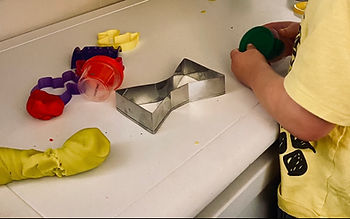
Play dough: This can be a fun hands-on activity, but it requires close supervision for children who might put it in their mouths. My one-year-old still needs careful watching with activities like this.
Stickers: A sheet of paper and some age-appropriate stickers can provide a simple activity with very little preparation. Be mindful of choking hazards with young children.
Blocks and puzzles: Offer age-appropriate building toys or simple puzzles that your little one can explore nearby. My son has the one linked here, and they are perfect because he loves to throw, and they are soft.
(affliate links above)
A special activity basket or bag: Keep a small basket or bag of toys and activities that only comes out during homeschool time. Rotating the contents can help keep things interesting.
You don't need to purchase a lot of new supplies. Everyday items and a few favorite toys can go a long way.
6. Incorporate Real-Life Tasks and Habits
Little ones love being included in what the rest of the family is doing. Homeschool time can be a great opportunity to practice simple habits and practical life skills.
Rather than always finding a toy or activity to entertain your toddler, give them small, age-appropriate tasks to do alongside you.
Depending on their age, they might:
Put books back on the shelf.
Put toys into a basket.
Help water plants with a small watering can.
Put clean socks into a basket.
Wipe a low table with a damp cloth.
Help tidy up after an activity.
These simple tasks give little ones a sense of purpose while helping them develop good habits. They also learn that everyone in the family contributes to keeping the home running smoothly.
Of course, tasks should be appropriate for your child's age and abilities, with supervision as needed.
7. Read Picture Books While an Older Sibling Reads Independently
If your older child is working on independent reading, use that time to enjoy picture books with your younger child.
Keep a basket of favorite picture books nearby so you can easily grab a few and settle in together. Your older child gets an opportunity to practice reading independently while your little one gets some special attention.
You can even choose books related to what your older child is studying. If you're learning about birds, for example, you could read a simple bird book with your toddler while your older child reads independently.
This is one of the benefits of homeschooling multiple ages: even when children are working at different levels, you can often find ways to enjoy a shared topic together.
And you don't need to turn every picture book into a lesson. Sometimes, simply enjoying a good book together is enough.
8. Save Some Subjects for When You Have Help
Some homeschool families may find it helpful to save certain subjects for nap time, especially lessons that require more focused instruction or hands-on activities.
Personally, I try to finish our homeschool day before nap time. That is my time to rest, have a little downtime, and recharge before the rest of the day! I don't want to spend that time trying to squeeze in more schoolwork.
However, every family has a different routine. If nap time works well for you, it might be a good opportunity to work on subjects that require your full attention.
You can also save more involved science experiments or art projects that require your full attention for when Dad, Grandma, or another trusted adult is available to help with the little ones.
The goal is to find a rhythm that works for your family, not to fill every available minute with schoolwork.
Remember to Give Yourself Grace
Homeschooling older children while caring for little ones isn't always easy. Some mornings will go smoothly, and others will require plenty of interruptions, extra snacks, and changes to your plans.
Your toddler may happily play beside you one day and need your attention every few minutes the next. That's normal!
You don't have to entertain your little one every second, nor do you need to create elaborate activities to make your homeschool day successful. Simple routines, time outdoors, good books, practical life skills, and a little flexibility can make a big difference.
Most importantly, remember that your little ones are learning, too. They're watching their older siblings, listening to stories, exploring the world around them, and learning the habits of family life.
Homeschooling multiple ages may look a little messy in this season, but that doesn't mean you're doing it wrong. Find a rhythm that works for your family, enjoy the little moments when you can, and give yourself grace along the way.
Looking for more homeschool inspiration? Explore Garden & Ivy Studio for literature, nature-based learning, and practical resources for your homeschool journey.
Affiliate Disclosure: This post contains affiliate links. As an Amazon Associate I earn from qualifying purchases. If you purchase through these links, I may earn a commission at no additional cost to you.


Comments